On Wall street, less revenue and more expense lead to bigger profit miss. In project management, late start and additional future delay lead to more schedule miss. In personal health, less intake and more fat burning lead to more weight loss. Those are all obvious use case of this math question: simple fact: if a – b = 1. (<a) – b < 1; a – (>b) < 1; and definitely (<a) – (>b) < 1.
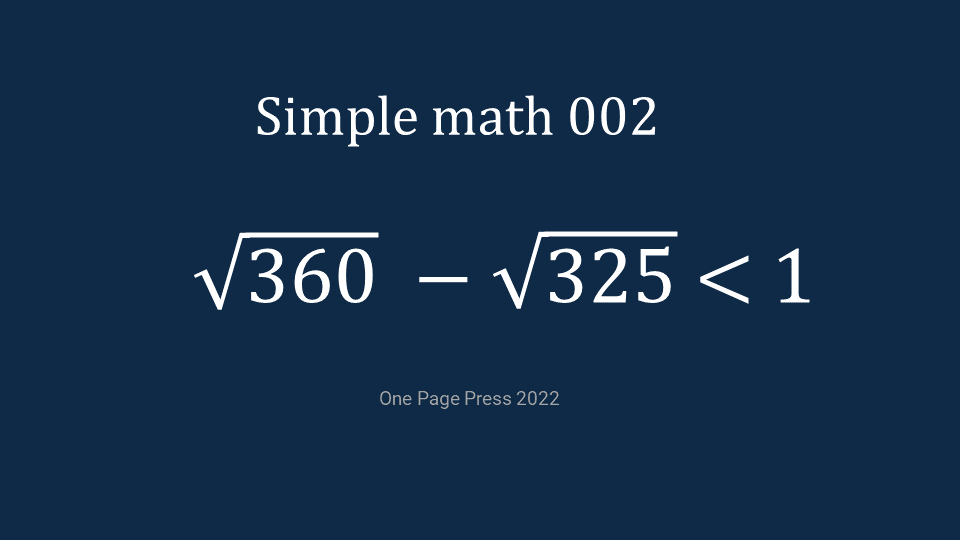

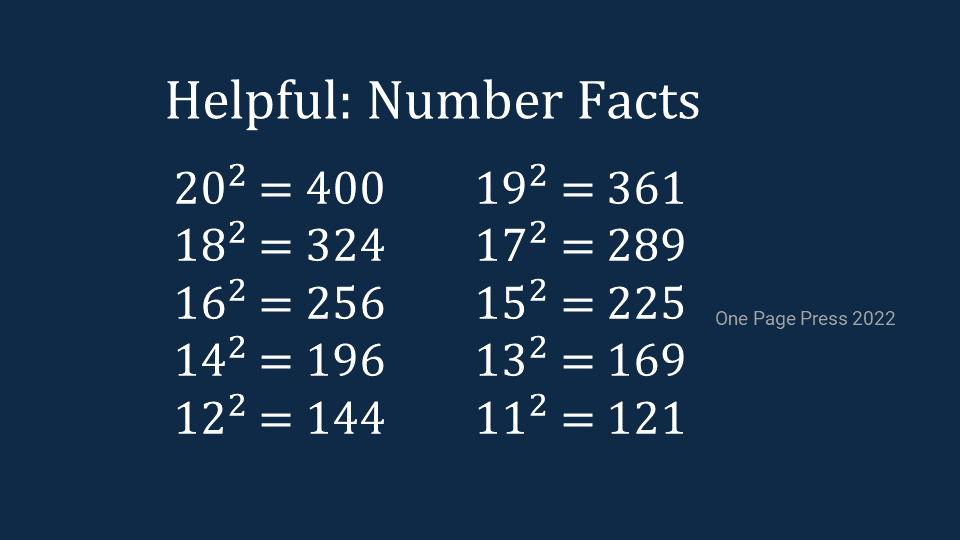
The first lesson learned is that: for certain situations, you don’t need to know the exact of the unknowns. You need to know the relativity of the unknowns to the knowns. This is true in many decision makings because we don’t need exact amount each time, we just need the relativity to a target.
The second lesson learned is that: when you face a seemingly complicate problem, try to break it down. In this example, √360 and √325 can be a full formula itself. Group and aggregate.
 One Page Press